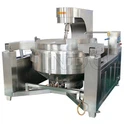
Let's talk about what materials are used to make a custard cooking mixer. As a custard cooking mixer supplier, I've got a good understanding of this topic.


First off, the most common material for the main body of a custard cooking mixer is stainless steel. Stainless steel is a real workhorse in the kitchen equipment world. It's super durable, which is crucial because a custard cooking mixer goes through a lot of wear and tear. It has to withstand high - temperature cooking processes, constant mixing, and the occasional rough handling. Also, stainless steel is corrosion - resistant. Custard often has a bit of moisture and sometimes acidic elements. If the mixer was made of a less resistant material, it could start to rust over time, which would not only damage the mixer but also contaminate the custard. Plus, stainless steel is easy to clean. You can wipe it down after each use, and it doesn't absorb odors or stains, so your next batch of custard won't have any odd flavors.
Another important component is the mixing blades. These are often made from high - grade stainless steel as well. The blades need to be strong enough to cut through the custard mixture and blend all the ingredients evenly. They also need to be sharp, but not so sharp that they're a hazard. Some custard cooking mixers might have blades with special coatings to reduce friction and make the mixing process even smoother.
For the motor housing, a combination of plastic and metal is often used. Plastic is lightweight and can be molded into different shapes easily. It helps to insulate the motor, protecting it from splashes and other minor impacts. The metal parts of the housing, usually aluminum or stainless steel, add strength and stability. The motor is the heart of the custard cooking mixer, and a well - protected housing ensures that it runs smoothly for a long time.
The heating element is a key part of any custard cooking mixer. In many cases, it's made from a type of metal alloy, usually nichrome. Nichrome alloys have high electrical resistance, which means they heat up quickly when an electric current passes through them. They're also able to maintain a consistent temperature, which is essential for making the perfect custard. If the temperature fluctuates too much, the custard can curdle or not set properly.
The control panel on a custard cooking mixer is often made with a combination of plastic and display materials like LCD screens. The plastic provides a durable outer layer that can resist spills and knocks. The LCD screen is great for showing temperature settings, mixing times, and other important information clearly. It's easy to read and operate, even with messy hands in a busy kitchen.
Some custard cooking mixers might also have rubber gaskets or seals. These are used to prevent leaks and keep the mixer airtight. Rubber is flexible and can create a snug fit between different parts of the mixer, like the lid and the body. It ensures that the heat and steam stay inside the mixer during the cooking process, which helps to cook the custard evenly.
Now, if you're also interested in other types of cooking mixers, we have some great options. Check out our Sauce Jam Cooking Mixer or the Steam Cooking Mixer Kettle. We also have the Electric Jacketed Cooking Kettle which is perfect for a variety of cooking needs.
Our custard cooking mixers are designed with high - quality materials to ensure they're reliable, long - lasting, and easy to use. Whether you're a small bakery making a few batches of custard a day or a large - scale food production facility, our mixers can meet your needs.
If you're thinking about purchasing a custard cooking mixer or want to learn more about our products, don't hesitate to reach out. Our team is always ready to help you find the best solution for your culinary business. We can provide detailed information about the features, performance, and suitability of our custard cooking mixers for your specific requirements. Start the conversation today and let's work together to take your custard production to the next level.
References:
- Kitchen Equipment Handbook: A Guide to Materials and Design
- Food Processing Machinery: Principles and Applications