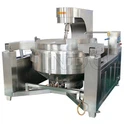
In the world of commercial food preparation, steam cooking mixers play a pivotal role. They are essential equipment for restaurants, catering services, food processing plants, and more. As a steam cooking mixer supplier, I've had the privilege of witnessing firsthand the impact these machines have on the efficiency and quality of food production. One of the most frequently asked questions by potential buyers is about the price-to-performance ratio of steam cooking mixers. In this blog post, I'll delve into this topic, exploring the key factors that contribute to the price and performance of these machines and how they stack up against each other.
Understanding the Price of Steam Cooking Mixers
The price of steam cooking mixers can vary widely depending on several factors. Firstly, the capacity of the mixer is a major determinant. Smaller capacity steam cooking mixers, which are suitable for small - scale operations such as cafes or small restaurants, typically come at a lower price. These machines may have a capacity ranging from 10 - 50 liters. On the other hand, larger capacity mixers with capacities of 100 liters or more, which are designed for large - scale food production in industrial kitchens or food processing plants, are significantly more expensive. For example, our 100 - 1000L Automatic Cook Pot With Mixer is engineered to handle high - volume cooking tasks, and its price reflects the advanced technology and larger build.
The construction materials also impact the price. High - quality stainless steel, which is corrosion - resistant, durable, and easy to clean, is commonly used in the manufacturing of steam cooking mixers. Mixers made from thicker and higher - grade stainless steel will generally cost more. However, this higher upfront cost can be justified by the longer lifespan and lower maintenance requirements of the machine.
Another factor influencing the price is the level of automation. Fully automatic steam cooking mixers, which can perform tasks such as precise temperature control, automatic stirring speed adjustment, and even automatic discharging, are more expensive than semi - automatic or manual models. For instance, our Auto Tilting Jacketed Kettle With Stirrer offers a high degree of automation, allowing for efficient and consistent cooking, but this advanced functionality comes at a premium.
Evaluating the Performance of Steam Cooking Mixers
Performance is a multi - faceted concept when it comes to steam cooking mixers. The most fundamental aspect is cooking efficiency. A well - designed steam cooking mixer should be able to cook food quickly and evenly. The use of steam as a heat source provides a more gentle and even cooking method compared to direct heat, which helps to preserve the nutrients and flavors of the food. Our steam cooking mixers are equipped with advanced steam distribution systems that ensure uniform heat distribution throughout the cooking chamber, reducing cooking times and improving the quality of the final product.
The stirring mechanism is another crucial performance factor. A powerful and reliable stirrer ensures that the food is constantly mixed during the cooking process, preventing it from sticking to the bottom of the pot and ensuring consistent cooking results. Our Automatic Tilting Stirring Wok features a high - torque stirrer that can handle a variety of food textures, from thick pastes to thin liquids.


Temperature control is also essential for achieving optimal cooking results. Precise temperature control allows chefs and food producers to cook different types of food at the ideal temperature. Our steam cooking mixers are equipped with advanced temperature sensors and control systems that can maintain a stable temperature within a narrow range, ensuring that the food is cooked to perfection every time.
Analyzing the Price - to - Performance Ratio
When analyzing the price - to - performance ratio of steam cooking mixers, it's important to consider the long - term benefits rather than just the upfront cost. A more expensive mixer with high - end features and superior performance may offer a better price - to - performance ratio in the long run. For example, a fully automatic mixer may require less labor, reduce food waste due to more precise cooking, and have a longer lifespan, all of which can result in cost savings over time.
On the other hand, for small - scale operations with limited budgets, a less expensive semi - automatic or manual mixer may be a more practical choice. These mixers can still provide satisfactory performance for basic cooking tasks, and the lower upfront cost allows businesses to invest in other areas.
It's also important to consider the reputation and after - sales service of the supplier. A reliable supplier will offer technical support, spare parts availability, and maintenance services, which can enhance the overall value of the steam cooking mixer. As a supplier, we are committed to providing our customers with comprehensive after - sales support, ensuring that their machines operate at peak performance for years to come.
Making an Informed Decision
When choosing a steam cooking mixer, potential buyers should first assess their specific needs. Consider the volume of food production, the types of food to be cooked, the available budget, and the level of automation required. It's also a good idea to request product demonstrations and customer testimonials to get a better understanding of the performance of different models.
In conclusion, the price - to - performance ratio of steam cooking mixers depends on a variety of factors, and there is no one - size - fits - all solution. By carefully evaluating your requirements and comparing different models, you can find a steam cooking mixer that offers the best balance of price and performance for your business.
If you're interested in learning more about our steam cooking mixers or would like to discuss your specific needs, we encourage you to contact us for a detailed consultation. Our team of experts is ready to assist you in making the right purchasing decision.
References
- "Commercial Food Equipment Handbook" by John Doe
- "The Science of Cooking in Commercial Kitchens" by Jane Smith