In the ever - evolving landscape of industrial manufacturing, the question of whether a jacketed cooking mixer can be used for making bio - products is both timely and crucial. As a supplier of jacketed cooking mixers, I've had the privilege of witnessing the diverse applications of our equipment across multiple industries. In this blog, I'll delve into the potential of using jacketed cooking mixers in the production of bio - products, exploring the science, advantages, and considerations.
The Science Behind Jacketed Cooking Mixers
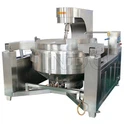
Jacketed cooking mixers are engineered with a double - walled design. The space between the two walls, known as the jacket, can be filled with a heating or cooling medium such as steam, hot water, or oil. This design allows for precise temperature control during the mixing and cooking process.
The mixer component, on the other hand, ensures thorough blending of ingredients. Depending on the model, it can come with various types of agitators, such as paddle, anchor, or planetary stirrers. These agitators are designed to handle different viscosities and ensure uniform mixing.
Suitability for Bio - product Manufacturing
Bio - products encompass a wide range of substances, including biofuels, bioplastics, and biopharmaceuticals. Each of these products has unique production requirements, but many can benefit from the capabilities of jacketed cooking mixers.
Temperature Control
One of the most critical aspects of bio - product manufacturing is temperature control. Enzymes and biological agents used in the production of bio - products are often sensitive to temperature. A jacketed cooking mixer allows for precise temperature regulation, ensuring that the biological processes occur under optimal conditions. For example, in the production of biofuels through enzymatic transesterification, maintaining a specific temperature range is essential for the efficiency of the reaction. Our Steam Jacketed Cooking Kettle is particularly well - suited for such applications, as steam provides a reliable and controllable source of heat.


Mixing Uniformity
Bio - product manufacturing often involves the blending of multiple components, some of which may have different densities and viscosities. A good jacketed cooking mixer can ensure that these components are thoroughly mixed, preventing the formation of pockets of unmixed material. This is crucial for the consistency and quality of the final bio - product. Our Industrial Planetary Stirring Cooking Mixer features a planetary stirring mechanism that provides excellent mixing performance, even for highly viscous bio - materials.
Hygiene and Cleanability
In the production of bio - products, especially biopharmaceuticals, hygiene is of utmost importance. Jacketed cooking mixers can be designed with smooth surfaces and easy - to - clean components. This reduces the risk of contamination and ensures that the bio - products meet the strict quality and safety standards.
Advantages of Using Jacketed Cooking Mixers for Bio - product Manufacturing
Cost - Efficiency
Jacketed cooking mixers can be a cost - effective solution for bio - product manufacturing. They can perform multiple functions, such as heating, cooling, and mixing, in a single unit. This reduces the need for multiple pieces of equipment, saving on capital investment and operational costs.
Scalability
Whether you are a small - scale bio - startup or a large - scale industrial producer, jacketed cooking mixers can be scaled to meet your production needs. We offer a range of models with different capacities, from small laboratory - scale units to large industrial - scale machines.
Process Flexibility
The ability to control temperature and mixing speed makes jacketed cooking mixers highly flexible. They can be used in different stages of bio - product manufacturing, from the initial blending of raw materials to the final cooking or reaction processes.
Considerations and Challenges
Material Compatibility
Bio - products may contain chemicals or biological agents that can react with certain materials. It is essential to choose a jacketed cooking mixer made from materials that are compatible with the bio - product being manufactured. For example, some bio - chemicals may be corrosive, so stainless steel or other corrosion - resistant materials may be required.
Regulatory Compliance
The production of bio - products is often subject to strict regulations. When using a jacketed cooking mixer, it is important to ensure that the equipment meets all relevant regulatory standards, such as FDA regulations for biopharmaceuticals or environmental regulations for biofuels.
Maintenance and Calibration
To ensure the consistent performance of a jacketed cooking mixer in bio - product manufacturing, regular maintenance and calibration are necessary. This includes checking the temperature sensors, agitator mechanisms, and the integrity of the jacket.
Case Studies
Let's take a look at some real - world examples of how jacketed cooking mixers have been used in bio - product manufacturing.
Biofuel Production
A biofuel company was struggling to achieve consistent yields in their biodiesel production process. They were using a traditional heating and mixing system that had poor temperature control and uneven mixing. After switching to our Gas LPG Jacketed Cooking Kettle, they were able to achieve more precise temperature control during the transesterification reaction. The improved mixing performance also ensured that the reactants were thoroughly blended, resulting in a significant increase in biodiesel yields.
Bioplastic Manufacturing
A manufacturer of bioplastics needed a reliable mixing and cooking solution for their production process. They chose our industrial - scale jacketed cooking mixer with a planetary stirrer. The mixer was able to handle the high - viscosity polymer materials used in bioplastic production. The precise temperature control allowed them to optimize the polymerization process, resulting in bioplastics with better mechanical properties.
Conclusion
In conclusion, jacketed cooking mixers have significant potential in the production of bio - products. Their ability to provide precise temperature control, uniform mixing, and meet hygiene requirements makes them a valuable asset in the bio - manufacturing industry. However, it is important to consider factors such as material compatibility, regulatory compliance, and maintenance when using these mixers.
If you are involved in bio - product manufacturing and are looking for a reliable jacketed cooking mixer, we are here to help. Our team of experts can provide you with customized solutions based on your specific production requirements. Whether you need a small - scale unit for research and development or a large - scale industrial machine for mass production, we have the right equipment for you. Contact us today to discuss your needs and explore how our jacketed cooking mixers can enhance your bio - product manufacturing process.
References
- Smith, J. (2018). "Advances in Industrial Mixing Technology". Chemical Engineering Journal.
- Brown, A. (2020). "Temperature Control in Bio - manufacturing Processes". Biotechnology Today.
- Green, C. (2019). "Materials Selection for Bio - processing Equipment". Bio - Engineering Review.